


Let us begin with a simple question.
What does happiness mean to you?
Some people think of laughter with family. Some think of peace after a long day of work. Others imagine success, health, or the quiet satisfaction of helping someone else. Happiness can look different for every person. Yet there is one interesting fact that many people do not know. Happiness is so important that the world has dedicated a special day to it.
Every year on March 20, people around the globe celebrate the International Day of Happiness. It is a day that reminds us that true progress in the world is not measured only by money, buildings, or technology. Real progress also includes the well being and happiness of people.
Today, let us explore the story behind this special day and understand why happiness has become an important conversation for countries, communities, and individuals.
A Small Country With A Big Idea
To understand the International Day of Happiness, we must travel to a small Himalayan country called Bhutan.
Bhutan is known for its beautiful mountains, peaceful culture, and a very unusual philosophy. Instead of measuring success only through economic growth, Bhutan introduced an idea called Gross National Happiness.
Now imagine a classroom discussion. A teacher asks students how we measure a country’s success. Most students might answer: money, industries, trade, or development. Bhutan’s leaders asked a different question.
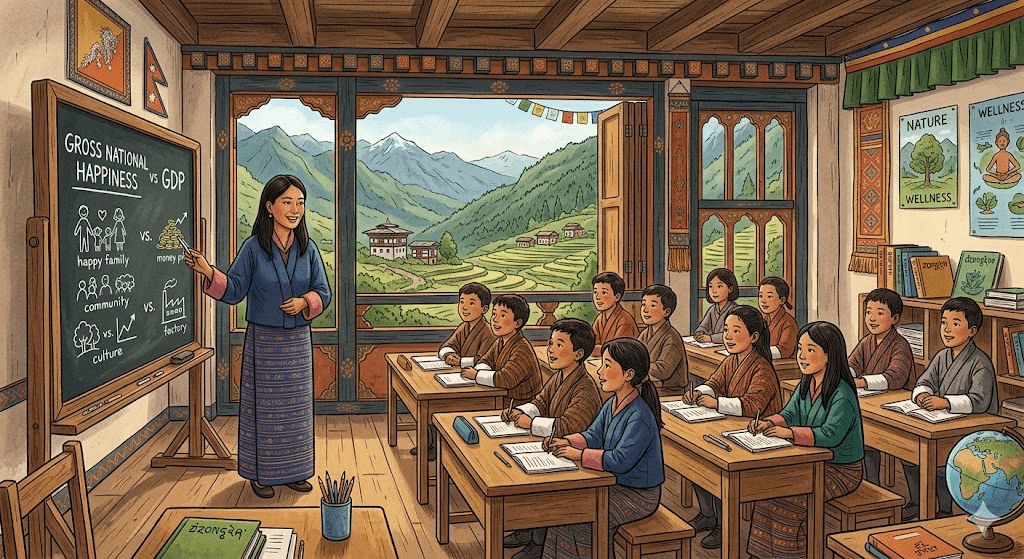
They asked:
“What if the true success of a country is how happy its people are?”
So instead of focusing only on Gross Domestic Product (GDP), Bhutan began to measure Gross National Happiness (GNH). This idea considered factors such as:
- Mental well being
- Environmental protection
- Cultural preservation
- Good governance
- Community vitality
It was a revolutionary way of thinking. The world slowly began to notice.
How The United Nations Made It Global
As years passed, more countries started discussing happiness as a serious topic. Governments, researchers, and organizations began studying what truly improves people’s lives.
In 2012, the United Nations General Assembly took an important step. They officially declared March 20 as the International Day of Happiness.
Why March 20?
Interestingly, this date is close to the spring equinox, a time when day and night are almost equal everywhere on Earth. Symbolically, it represents balance, which is an essential ingredient for happiness.
The United Nations believed that economic growth alone cannot create a healthy society. Countries should also consider well being, equality, sustainability, and social harmony.
From that moment, the International Day of Happiness became a global reminder that happiness is not a luxury. It is a human goal worth protecting.
What Science Says About Happiness
Let us imagine a teacher explaining happiness not only through philosophy but also through science.
Researchers have spent decades studying what makes people happy. Surprisingly, many of the answers are simple and deeply human.
Here are some important lessons scientists have discovered.
1. Relationships Matter More Than Wealth
One of the longest studies ever conducted on happiness comes from Harvard University. It followed people for more than 80 years.
The conclusion was clear.
People who maintain strong relationships with family, friends, and community tend to live happier and healthier lives.
Money can solve problems. But relationships create emotional strength.
2. Gratitude Changes The Mind
Psychologists have found that people who regularly practice gratitude tend to feel more satisfied with life.
Think about a teacher telling students to write three good things that happened during the day. It sounds simple. Yet this practice trains the brain to focus on positive experiences instead of worries.
Gratitude does not remove difficulties. But it changes how we see them.
3. Helping Others Creates Joy
Another surprising truth about happiness is that kindness creates happiness.
When we help someone, our brain releases chemicals such as dopamine and oxytocin, which create feelings of warmth and connection.
This is why acts like volunteering, sharing knowledge, or supporting a friend often make us feel fulfilled.
In simple words, happiness grows when it is shared.
Happiness In A Fast Moving World
Modern life is faster than ever before. Technology connects people across continents within seconds. Yet many people feel stressed, lonely, or overwhelmed.
This is one reason the International Day of Happiness is important today.
It reminds us that progress should not only mean working harder or earning more. It should also mean creating lives that feel meaningful and balanced.
Schools, workplaces, and communities around the world now celebrate this day by encouraging activities that promote well being.
Some examples include:
- Community gatherings
- Mental health awareness programs
- Gratitude campaigns
- Acts of kindness initiatives
- Educational discussions about emotional well being
Each activity carries the same message: happiness deserves attention.
The Global Happiness Report
Every year, researchers publish something called the World Happiness Report. It ranks countries based on factors that influence life satisfaction.
These factors include:
- Social support
- Freedom to make life choices
- Income levels
- Trust in institutions
- Healthy life expectancy
- Generosity
Interestingly, the happiest countries are not always the richest. Many of them simply provide strong social systems and encourage balanced lifestyles.
The report reminds governments that policy decisions should consider human well being, not only economic numbers.
Simple Lessons We Can Learn
If a teacher were to summarize the story of the International Day of Happiness , the lesson might sound like this.
Happiness is not something we chase endlessly. It is something we build slowly through everyday actions.
Some simple habits can make a real difference:
- Spend time with people who care about you
- Take moments to appreciate small joys
- Help others when possible
- Protect your mental and physical health
- Find purpose in the work you do
These habits may sound small, yet they shape how we experience life.
A Message Worth Remembering
The International Day of Happiness carries a quiet but powerful message.
A world that focuses only on productivity can easily forget human well being. But a world that values happiness creates stronger communities, healthier individuals, and more compassionate societies.
When people feel supported and hopeful, they contribute more positively to the world around them.
Happiness, therefore, is not just a personal feeling. It is a social strength.

Conclusion
The International Day of Happiness began with a simple but meaningful idea. True development should include the happiness and well being of people. From Bhutan’s philosophy of Gross National Happiness to the United Nations’ global recognition, the journey of this day reminds us that progress is not only about economic growth.
It is also about the quality of life we create for ourselves and others. By practicing kindness, gratitude, and meaningful connection, we participate in a shared global goal: building a world where happiness is valued, protected, and spread from one person to another.







Leave a Reply