


If you spend even a little time on social media, you have probably seen numbers written like 1K, 10K, 100K, or 1M.
You might notice them under posts or profiles:
- “1K likes”
- “10K followers”
- “100K views”
- “1M subscribers”
For people who use social media regularly, these numbers feel completely normal. But if you are new to platforms like Instagram, YouTube, TikTok, or Twitter, these abbreviations can feel confusing at first.
What exactly does 1K mean?
Why do people write 1M instead of 1,000,000?
And where did these shortcuts even come from?
Let us explore the full story behind these numbers. By the end of this guide, you will clearly understand what they mean, why they exist, and how they became part of everyday internet language.
Understanding The Basics: What Do 1K And 1M Mean?
The short answer is simple.
These letters are abbreviations used to shorten large numbers.
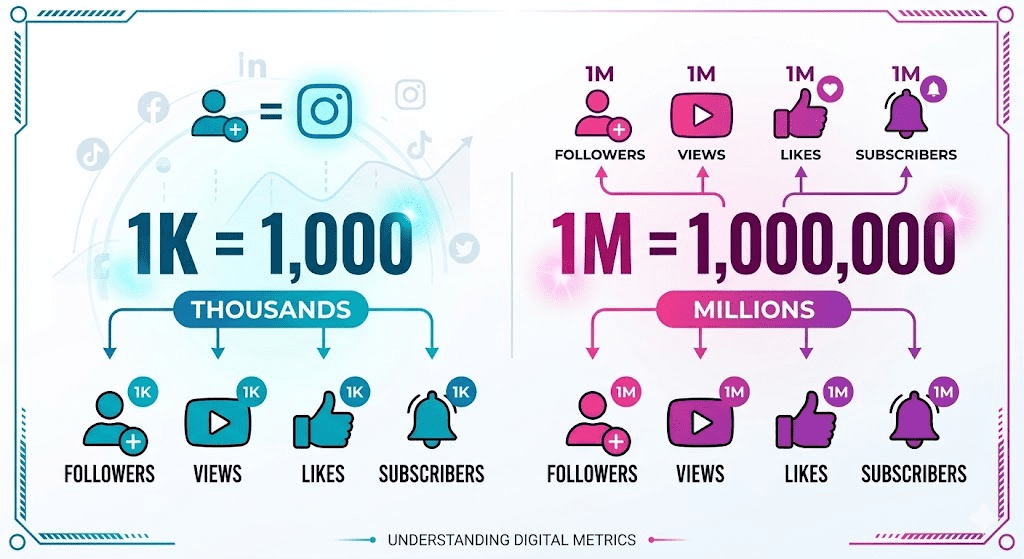
1K Means 1,000
The letter K represents one thousand.
So when you see:
- 1K followers, it means 1,000 followers
- 5K views, it means 5,000 views
- 10K likes, it means 10,000 likes
Instead of writing 1,000, platforms use 1K because it is shorter and easier to read.
1M Means 1,000,000
The letter M represents one million.
For example:
- 1M views means 1,000,000 views
- 1M followers means 1,000,000 followers
- 2M subscribers means 2,000,000 subscribers
Large numbers like one million contain six zeros, so using M makes numbers cleaner and easier to understand at a glance.
Why The Letter K Means Thousand
At first glance, the letter K might seem strange.
After all, the word thousand starts with T, not K. So why not write 1T?
The answer comes from science and the metric system.
The letter K comes from the word “kilo.”
“Kilo” is a prefix used in measurement systems and it means one thousand units.
You see this in everyday measurements:
- 1 kilometer = 1,000 meters
- 1 kilogram = 1,000 grams
- 1 kilobyte = 1,000 bytes
Because the metric system is used worldwide, K became the universal symbol for 1,000.
Over time, this symbol moved beyond science and started appearing in:
- Finance
- Technology
- Data analysis
- Social media metrics
Today, K is widely understood to mean 1,000 in almost every digital context.
Why Social Media Uses Shortened Numbers
Social media platforms handle massive amounts of data every second.
Millions of users are posting content, liking posts, watching videos, and following accounts. If every number were written in full, the interface would quickly become messy and hard to read.
Imagine these examples:
Instead of:
1,000,000 views
Platforms simply show:
1M views
Instead of:
10,000 followers
They show:
10K followers
These abbreviations help platforms in several ways.
1. They Save Space
Most social media platforms are designed for mobile screens, where space is limited.
Short numbers allow platforms to display metrics clearly without overcrowding the screen.
2. They Improve Readability
Large numbers with many zeros can slow people down while reading.
Compare these two versions:
1000000 views
vs
1M views
The second version is instantly easier to understand.
3. They Make Metrics Easier To Compare
When creators or brands compare performance, short numbers make it easier.
For example:
- 12K followers
- 250K followers
- 3M followers
These numbers can be scanned quickly without counting digits.
Common Social Media Number Abbreviations
Let us break down the most common number formats you will see online.
| Abbreviation | Full Number |
|---|---|
| 1K | 1,000 |
| 10K | 10,000 |
| 100K | 100,000 |
| 1M | 1,000,000 |
| 10M | 10,000,000 |
| 1B | 1,000,000,000 |
These abbreviations appear across many platforms including:
- YouTube
- TikTok
- Twitter (X)
Examples Of How These Numbers Appear Online
Let us look at real-world examples.
On Instagram
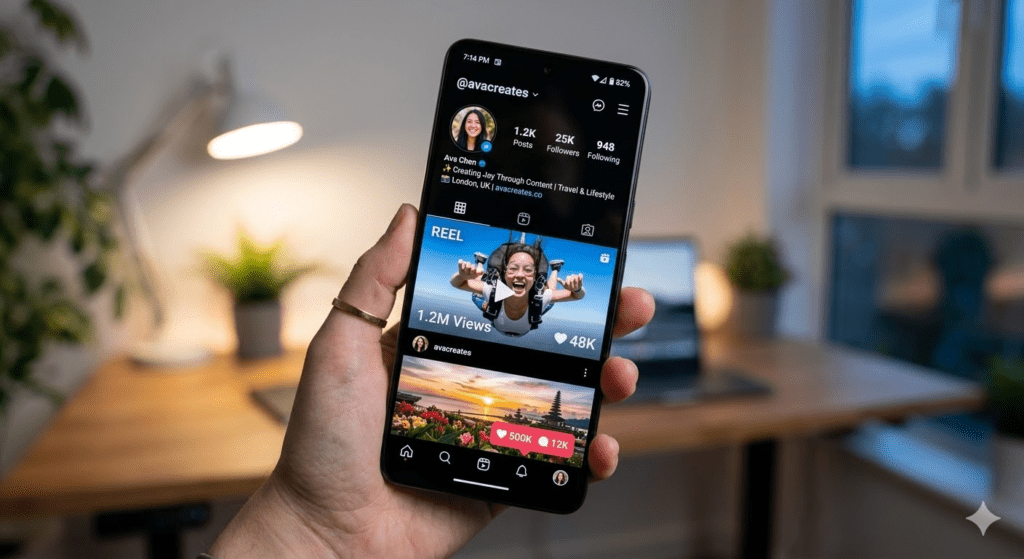
A profile might show:
25K followers
That means the account has 25,000 followers.
On YouTube
A video might display:
1.2M views
This means the video has been watched 1,200,000 times.
On TikTok
A post might show:
500K likes
This means the video received 500,000 likes.
Understanding Decimal Numbers Like 1.5K Or 2.3M
Sometimes numbers include decimals.
For example:
- 1.5K
- 2.3M
- 3.7K
These represent approximate values.
Example
1.5K = 1,500
The platform shortens numbers instead of showing the full count.
Another example:
2.3M = 2,300,000
This allows platforms to display numbers accurately while still keeping them short.
What Comes After Million?
As online platforms grow, numbers continue to get larger.
Here are the next common abbreviations.
B Means Billion
1B = 1,000,000,000
You might see this on extremely popular videos.
Example:
1B views on YouTube
That means the video was watched one billion times.
T Means Trillion
1T = 1,000,000,000,000
This number rarely appears in social media metrics today, but it is common in:
- Economics
- Global finance
- Data storage
Why These Numbers Matter For Creators
For content creators, these numbers are more than just statistics.
They represent audience reach and influence.
For example:
1K Followers
Often considered the point where a creator begins building a real audience.
10K Followers
Many platforms unlock additional features at this level.
For example:
Instagram previously allowed link sharing in stories after reaching 10K followers.
100K Followers
At this level, creators often gain strong visibility and potential brand partnerships.
1M Followers
Reaching one million followers is considered a major milestone. Creators at this level often have significant influence and large communities.
The Psychology Behind Social Media Numbers
Numbers like 1K, 100K, or 1M are not just informational. They also affect how people perceive content.
Humans naturally respond to social proof.
When people see large numbers of views, likes, or followers, they tend to assume the content is valuable.
For example:

If two videos appear in search results:
- Video A has 150 views
- Video B has 1.5M views
Most people will instinctively click the second one.
This phenomenon is called the bandwagon effect, where people trust what many others already support.
Because of this, social media numbers often influence:
- Content credibility
- Popularity perception
- Brand trust
- Viral growth
The History Of Shortened Numbers On The Internet
The use of shortened numbers started long before social media.
In the early days of computing, engineers needed faster ways to represent large values.
Data storage systems used abbreviations such as:
- KB (kilobytes)
- MB (megabytes)
- GB (gigabytes)
Later, financial markets adopted similar shorthand for money values.
For example:
- $10K = $10,000
- $1M = $1,000,000
When social media platforms launched in the 2000s, developers naturally adopted these same abbreviations.
Over time, they became part of everyday internet language.
Today, millions of people around the world understand these symbols instantly.
Why These Abbreviations Will Continue To Grow
As the internet expands, numbers will continue to rise.
Some TikTok videos already reach hundreds of millions of views. Some YouTube channels have tens of millions of subscribers.
To manage these massive numbers efficiently, abbreviated formats like K, M, and B will remain essential.
They help keep platforms readable, simple, and easy to navigate.
Final Thoughts
What once looked like mysterious symbols — 1K, 10K, 100K, 1M — are actually simple tools designed to make large numbers easier to read and understand.
The letter K represents one thousand, while M represents one million. These abbreviations originate from scientific measurement systems but have become part of everyday digital communication.
Today they appear everywhere: in follower counts, video views, likes, and engagement metrics across nearly every social platform.
Understanding these symbols not only helps you interpret social media statistics but also gives you insight into how digital platforms manage and present massive amounts of data.
So the next time you see 1K likes, 100K views, or 1M followers, you will know exactly what those numbers represent.
They are simply a smarter way of expressing big numbers in a fast-moving digital world.





Leave a Reply