

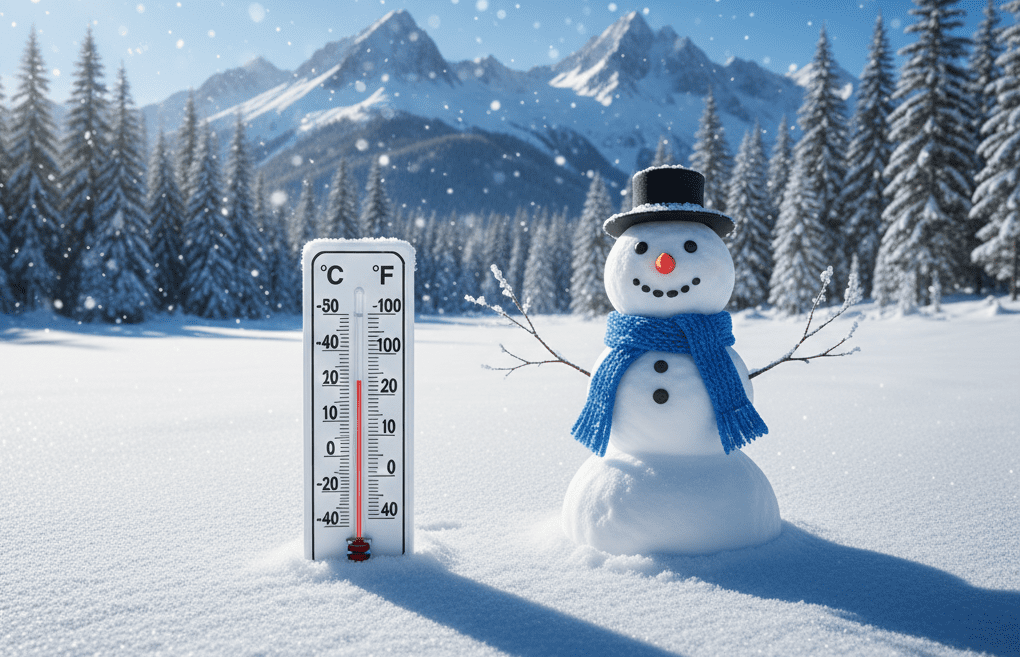
It sounds like one of those tricky riddles you might hear in a science class or see on a quiz show. The question is simple: which is colder: minus 40°C or minus 40°F?
When you first look at it, your brain probably tells you to pick one. After all, Celsius and Fahrenheit are totally different ways of measuring temperature. They usually have different numbers for the same thing—water freezes at 0°C but at 32°F. So, it feels like minus 40 in one system must be different from minus 40 in the other.
But here is the surprise that stumps almost everyone: Neither one is colder.
The Magic Meeting Point
The answer is that minus 40 degrees Celsius and minus 40 degrees Fahrenheit are exactly the same temperature. They are equal.
If you were standing outside in Antarctica and your thermometer read -40°C, and your friend was standing next to you with a thermometer that read -40°F, you would both be freezing just as much. This is the only time these two temperature scales meet at the exact same number.
So, when someone asks which is colder: minus 40°C or minus 40°F?, you can confidently tell them it’s a tie. It is the specific point where the math of both systems crosses paths.
Why Do They Meet at -40?
To understand this, imagine two friends walking towards the same destination but starting from different houses and walking at different speeds.
- Celsius is the friend who likes things simple. This scale is used by most of the world and is based on water.
- 0° is freezing.
- 100° is boiling.
- There are 100 steps between them.
- Fahrenheit is the friend who likes things a bit more detailed. This scale is mostly used in the United States.
- 32° is freezing.
- 212° is boiling.
- There are 180 steps between them.
Because Fahrenheit has smaller steps (degrees) and starts at a higher number (32 instead of 0), the two scales don’t line up at first. But as the temperature drops lower and lower below zero, the lines on the graph get closer together. Finally, at -40, they crash into each other.
Celsius vs. Fahrenheit: Quick Comparison
To understand why -40° is such a special number, it helps to look at other common temperatures we experience every day.
In Celsius, the numbers 0 and 100 are the main anchors (freezing and boiling). In Fahrenheit, the numbers are higher and more spread out.
Here is how they match up side-by-side:
| Situation | Celsius (°C) | Fahrenheit (°F) |
| Water Boils | 100°C | 212°F |
| Human Body Temp | 37°C | 98.6°F |
| Room Temperature | 20°C | 68°F |
| Water Freezes | 0°C | 32°F |
| Very Cold Day | -18°C | 0°F |
| The Magic Meeting Point | -40°C | -40°F |
As you can see in the table, the numbers are usually totally different. Minus 40 is the only spot where they agree perfectly!
Doing the Math (Don’t Worry, It’s Easy!)
You don’t just have to take my word for it. We can prove which is colder: minus 40°C or minus 40°F? by using a simple formula that changes Celsius into Fahrenheit.
The formula is: Multiply by 1.8, then add 32.
Let’s try it with minus 40:
- Take -40.
- Multiply it by 1.8. (Answer: -72)
- Add 32 to -72.
When you add a positive number (32) to a big negative number (-72), you get -40.
See? The math proves that which is colder minus 40°c or minus 40°f is actually a trick question because they result in the exact same number.
What Does -40 Actually Feel Like?
We’ve talked a lot about the numbers, but what is it like to actually be in -40 degree weather?
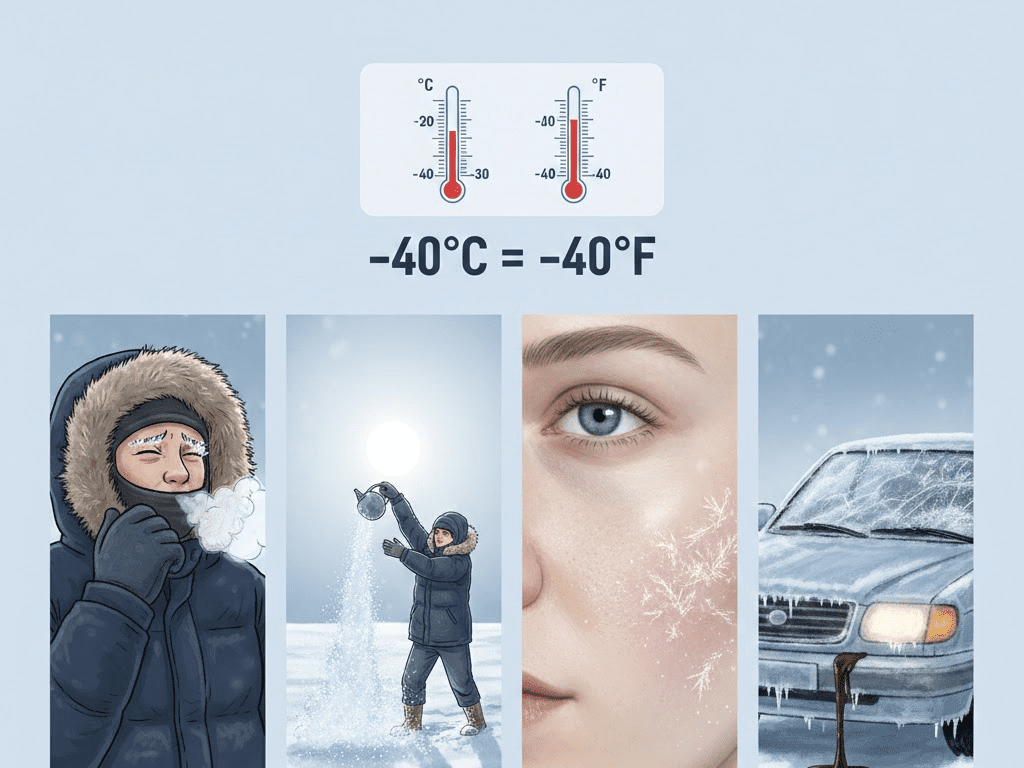
It is dangerous. At this temperature, the air is so cold it hurts to breathe.
- Instant Freezing: If you throw a cup of boiling water into the air at -40, it turns into snow before it hits the ground.
- Skin Safety: Your skin can freeze in less than 5 minutes.
- Machines Break: Cars struggle to start because the oil gets thick like honey.
So, while it’s fun to debate which is colder: minus 40°C or minus 40°F?, you definitely don’t want to experience it without a very heavy coat!
Final Summary
Next time a friend tries to stump you by asking which is colder: minus 40°C or minus 40°F?, you can smile and give them the correct answer.
It isn’t a trick. It’s just math. Celsius and Fahrenheit are two different languages for temperature, but at -40, they are finally saying the exact same word.
- Is Celsius colder? No.
- Is Fahrenheit colder? No.
- Are they the same? Yes, exactly.
Keep this fact in your back pocket—it is one of the coolest (pun intended!) facts in science.





Leave a Reply