

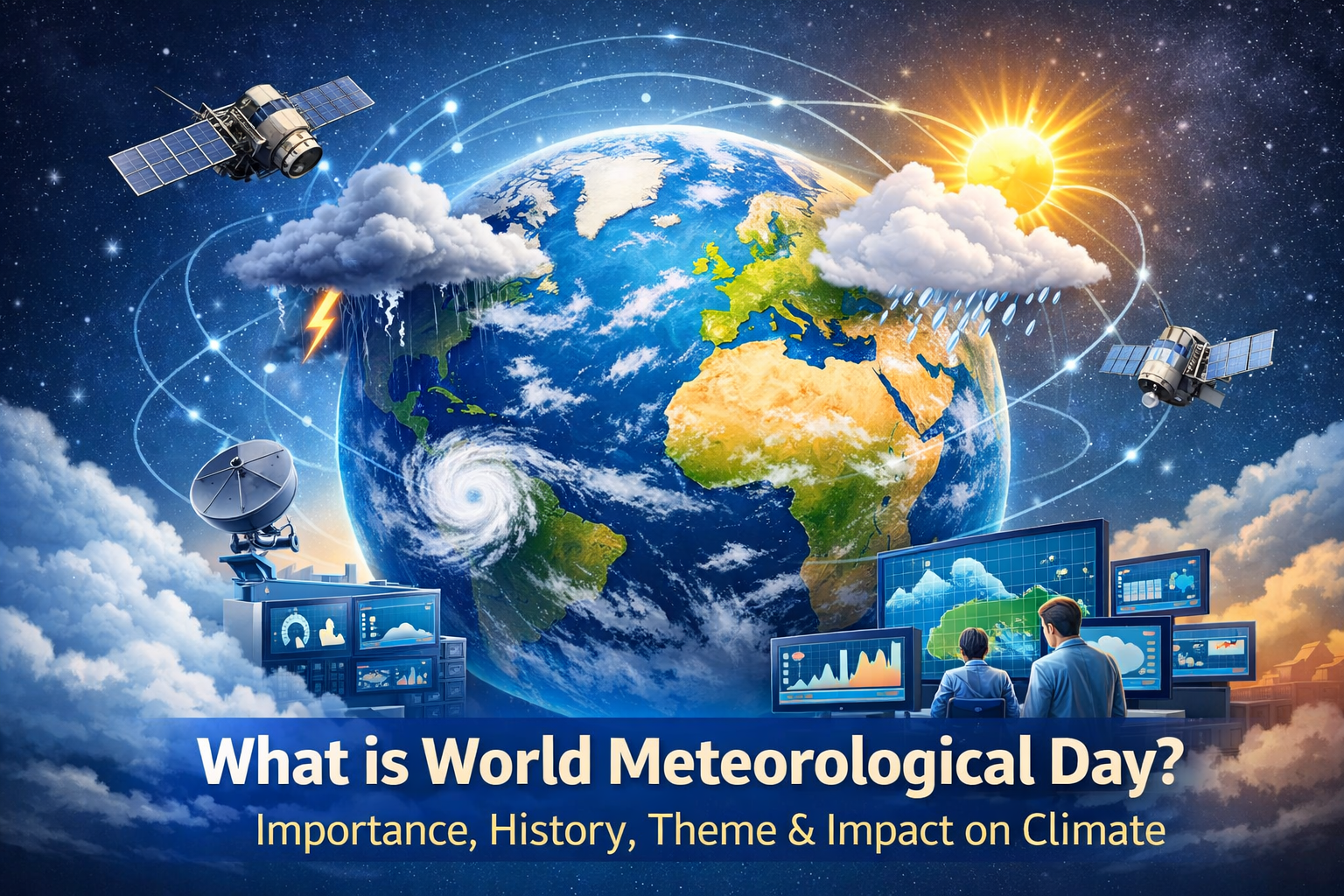
Weather affects almost everything we do in our daily lives. From choosing what to wear to planning travel or farming activities, we depend heavily on weather conditions. But have you ever wondered who studies the weather and how we get accurate forecasts?
This is where World Meteorological Day becomes important. It is a global awareness day that highlights the role of weather, climate, and water in our lives. It also helps people understand how meteorology supports safety, economic growth, and environmental protection.
In this article, you will learn everything about World Meteorological Day in a simple and engaging way, including its history, importance, theme, and how it connects to climate change.
What is World Meteorological Day?
Definition and Meaning
World Meteorological Day is an international observance celebrated every year on March 23. It marks the establishment of the World Meteorological Organization (WMO), a United Nations agency responsible for weather, climate, and water-related issues.
This day focuses on raising awareness about:
- Weather forecasting
- Climate science
- Natural disaster preparedness
- Environmental protection
Why is World Meteorological Day Celebrated?
World Meteorological Day is celebrated to educate people about how weather and climate impact our lives. It also highlights the importance of early warning systems and scientific research.
The key purposes include:
- Promoting public awareness about climate and weather changes
- Encouraging global cooperation in meteorology
- Supporting disaster risk reduction
- Highlighting the importance of sustainable development
History and Background of World Meteorological Day
Origin of the Day
World Meteorological Day commemorates the formation of the World Meteorological Organization (WMO) on March 23, 1950.
Before the WMO, countries worked independently to study weather. However, since weather patterns cross borders, it became necessary for nations to collaborate and share data.
This led to the creation of a global organization that could improve weather forecasting and climate monitoring worldwide.
Role of the World Meteorological Organization (WMO)
The WMO plays a crucial role in global weather and climate management. It connects countries and helps them share data and knowledge.
Its major responsibilities include:
- Monitoring global weather and climate systems
- Providing accurate weather forecasts
- Supporting early warning systems for disasters
- Studying climate change and environmental trends
Because of the WMO, countries can work together to reduce risks caused by extreme weather events.
Importance of Meteorology in Daily Life
What is Meteorology?
Meteorology is the scientific study of the atmosphere and weather. It helps us understand how weather changes and how it can be predicted.
Meteorologists use data, tools, and models to study:
- Temperature
- Rainfall
- Wind patterns
- Storm systems
Why Weather and Climate Matter
Weather and climate affect every part of our lives. Here are some real-life examples:
Agriculture
Farmers rely on weather forecasts to decide when to plant and harvest crops. Unexpected rain or drought can affect food production.
Transportation
Weather conditions impact road, rail, air, and sea travel. Fog, storms, or heavy rainfall can cause delays and accidents.
Health
Weather changes can affect human health. Heatwaves can cause dehydration, while cold weather can lead to respiratory problems.
Disaster Management
Meteorology helps predict natural disasters such as cyclones, floods, and droughts. Early warnings help save lives and reduce damage.
Theme of World Meteorological Day
What is the Theme?
Each year, World Meteorological Day has a specific theme that focuses on a major global issue related to weather or climate.
For example, recent themes have included:
- Early warning systems
- Climate action
- The future of weather forecasting
Why the Theme Matters
The annual theme helps focus global attention on urgent environmental challenges.
It encourages:
- Awareness among people
- Policy action by governments
- Scientific innovation
For example, if the theme is about early warning systems, it emphasizes the need to improve disaster alerts to protect lives.
How Weather Affects Our Daily Life
Everyday Activities
Weather influences many daily decisions:
- Choosing clothes based on temperature
- Planning outdoor activities
- Scheduling travel
Impact on Health
Weather plays a role in physical well-being:
- High temperatures can cause heatstroke
- Cold weather can weaken immunity
- Humidity can increase infections
Extreme Weather Events
Extreme weather events can have serious consequences:
Storms and Cyclones
Strong winds and heavy rainfall can damage infrastructure and homes.
Floods
Excess rainfall can lead to flooding, affecting people, crops, and property.
Heatwaves
Rising temperatures can lead to water shortages and health risks.
Understanding these risks helps people prepare better.
Role of Technology in Weather Forecasting
Modern Tools Used
Technology has improved weather forecasting significantly.
Satellites
Satellites monitor cloud movements and weather patterns from space.
Radar Systems
Radars detect rain, storms, and wind direction.
Weather Apps
Mobile apps provide real-time weather updates, making forecasts easily accessible.
Importance of Accurate Forecasts
Weather forecasts help in:
- Disaster preparedness
- Agricultural planning
- Travel safety
Early warnings can save thousands of lives by allowing people to prepare in advance.
Climate Change and Meteorology
What is Climate Change?
Climate change refers to long-term changes in Earth’s temperature and weather patterns.
In simple terms, the planet is gradually becoming warmer.
Link Between Climate Change and Meteorology
Meteorology helps track and understand climate change through data and observations.
Effects of climate change include:
- Rising global temperatures
- Changing rainfall patterns
- More frequent extreme weather events
This makes meteorological research more important than ever.
How World Meteorological Day is Celebrated
Global Celebrations
World Meteorological Day is celebrated worldwide through:
- Educational programs in schools and colleges
- Awareness campaigns through media
- Workshops and seminars
Government and Organization Initiatives
Governments and organizations conduct:
- Climate awareness programs
- Disaster preparedness training
- Public information campaigns
These activities help people understand the importance of weather science.
What We Can Do as Individuals
Simple Actions to Follow
Everyone can contribute in small ways:
- Stay updated with weather forecasts
- Use resources like water and energy wisely
- Reduce pollution
- Plant trees and support green initiatives
Importance of Awareness
Being aware of weather conditions helps us stay safe and make better decisions.
Sharing information with others can also help communities prepare for risks.
SEO Keywords Related to World Meteorological Day
To understand this topic better from a digital perspective, here are some commonly searched keywords:
- World Meteorological Day 2026
- Importance of meteorology
- Weather and climate awareness
- Role of WMO
- Climate change and weather forecasting
- Benefits of weather forecasting
- Meteorology in daily life
These keywords help improve online visibility and make the content easier to find.
Conclusion
World Meteorological Day is an important global event that reminds us how deeply weather and climate affect our lives. From daily activities to major disasters, meteorology plays a key role in keeping us informed and safe.
Thanks to modern technology and global cooperation, weather forecasting has become more accurate and reliable. However, challenges like climate change make it even more important to stay aware and take action.
By understanding weather, respecting nature, and making responsible choices, we can contribute to a safer and more sustainable future.




Leave a Reply