

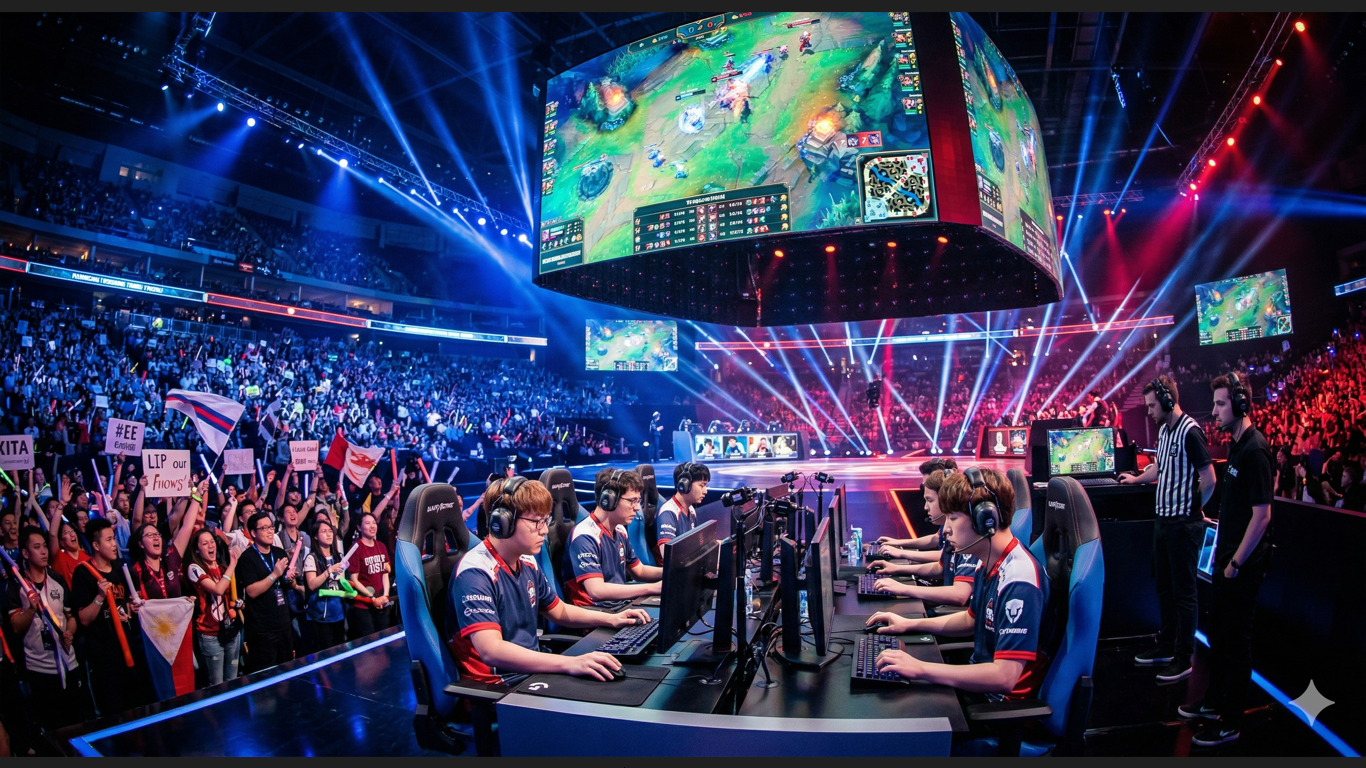
Over the past few years, e-sports has grown from a small hobby into a huge global industry. Once considered just for gamers, it now features professional leagues, millions of viewers, and sponsorships from big brands. As gaming keeps expanding, people are asking if competitive gaming could become part of the Olympics. This article looks at how e-sports has risen, its possible role in the Olympics, and what this might mean for the future of sports.
What is E-sports?
E-sports are organized video game competitions where professional players compete alone or in teams. These events are usually streamed online and attract large audiences. E-sports covers many types of games, from action titles like League of Legends and Fortnite to strategy games like Dota 2 and StarCraft II.
Unlike traditional sports that need physical skills, e-sports depend on mental focus, teamwork, quick reactions, and strategy. Because of the high level of skill and competition, many now see e-sports as a real form of sports entertainment.
The Rapid Growth of E-sports
The rise of e-sports has been nothing short of extraordinary. Over the past decade, the industry of E-sports has grown rapidly over the last ten years. More people are playing and watching than ever before. Big tournaments now fill stadiums, and millions tune in on platforms like Twitch, YouTube, and Facebook Gaming. The industry is projected to generate over $1 billion in revenue. These figures make e-sports one of the fastest-growing sectors in sports and entertainment.
E-sports Tournaments and Global Impact
E-sports tournaments like The International (for Dota 2), the Big e-sports tournaments such as The International (for Dota 2), the League of Legends World Championship, and the Overwatch League now offer huge prize pools, sometimes reaching tens of millions of dollars. These events draw sponsors from tech companies like Intel, NVIDIA, and Logitech, as well as well-known brands like Coca-Cola and Nike. The rise of e-sports has also led to the construction of new arenas and facilities built just for gaming, underscoring its worldwide importance. With e-sports, many have begun to question whether competitive gaming should be included in the Olympics. The International Olympic Committee (IOC) has expressed interest in e-sports, and in 2018, it even hosted an Olympic Virtual Series event featuring virtual sports competitions. This marked the first time the IOC publicly embraced competitive gaming, raising the question: Could e-sports be part of the Olympic Games in the future?
The Case for E-sports in the Olympics
There are a few strong reasons why e-sports might become part of the Olympic Games:
- Massive Global Popularity
E-sports has a huge global following, especially among younger generations. Esports is very popular worldwide, especially with younger people. Most fans are millennials and Gen Z, the same groups who watch the Olympics. Adding e-sports could help the Olympics stay important as digital entertainment becomes more common. And, like other sports, e-sports showcase mental acuity, reflexes, and teamwork. Many believe that these qualities deserve recognition as sports. E-sports could serve as a bridge between traditional sports and the growing influence of digital culture.
- Accessibility and Inclusivity
E-sports lets people compete no matter where they live, their gender, or physical ability. Unlike many traditional sports, which can have physical barriers, competitive gaming is open to anyone with the right skills and equipment.
- The Rise of Virtual Sports
With the increasing popularity of virtual sports and video game simulations, the distinction between real and virtual sports is becoming less clear. Games like FIFA, NBA 2K, and eRacing already have large fan bases and might one day be part of the Olympics as digital versions of traditional sports.
Despite the strong case for e-sports, there are still challenges: one is the lack of universal regulation. Unlike traditional sports, which have well-established governing bodies (e.g., FIFA for soccer, the International Basketball Federation for basketball), e-sports lacks a unified governance structure. This could make it difficult to organize a fair, globally recognized competition.
- The Role of Video Games
Another issue is deciding which games should be included in Olympic e-sports events. Some games are made just for fun, not for serious competition. Picking the right games for the Olympics would need careful thought and could lead to disagreements.
- Cal vs. Mental Sports.
Some people think e-sports should not be in the Olympics because they do not involve physical activity. For many, the Olympics are about showing human strength, agility, and endurance. Adding e-sports could challenge this traditional idea.
- Balancing Tradition and Innovation
The Olympics has a long history and strong traditions. Bringing in e-sports could change what the Games stand for, and some people might not like that. The IOC will need to find a way to respect tradition while also accepting new, digital competitions.
The Future of E-sports and the Olympics
As e-sports continue to grow, it seems more likely that they will join the Olympics. The debate about its place may go on for a while, but the outlook is positive. Some experts think the Olympics might first add e-sports as a demonstration sport, as they did with skateboarding and snowboarding before making them official events.
No matter if e-sports becomes a regular part of the Olympics, it has already made a big impact on sports. The growing popularity of competitive gaming has changed the sports world and will likely continue to do so.
Conclusion
E-sports has evolved into a global phenomenon with massive cultural, social, and economic influence. While it may not yet be a part of the Olympics, the growing interest and participation in competitive gaming suggest that it could one day have a place in the Games. Whether or not e-sports becomes an Olympic sport, its impact on the future of competitive gaming and the sports world at large will be significant.
FAQs
1. Is e-sports considered a sport?
Yes, while e-sports does not require the physical athleticism of traditional sports, it does require skill, strategy, and mental focus, making it widely regarded as a legitimate form of competition.
2. Could e-sports be included in the 2024 Paris Olympics?
While e-sports will not be part of the 2024 Paris Olympics, there is growing interest in its inclusion in future Olympic Games, and it may appear as a demonstration sport in upcoming years.
3. What are the most popular e-sports games?
Popular e-sports games include League of Legends, Dota 2, Counter-Strike: Global Offensive, Fortnite, Overwatch, and Valorant. These games have massive player bases and are featured in major global tournaments.
4. Why do people watch e-sports?
People watch e-sports because it is fun, competitive, and exciting. Like with traditional sports, fans love seeing the best players compete in important matches.
5. What are the challenges of adding e-sports to the Olympics?
Challenges include regulating the industry, determining which games are suitable for Olympic-level competition, and balancing the physical nature of traditional Olympic sports with the mental focus required in e-sports.




Leave a Reply