


When you type a website URL into your browser, complex invisible traffic management happens behind the scenes. Have you ever wondered how massive web platforms handle millions of requests securely without crashing? They certainly do not funnel every single user directly to a single, overworked machine. That would cause an immediate catastrophic failure. Instead, they rely on brilliant architectural gateways designed for heavy lifting.
What is a Reverse Proxy?
Let’s cut right through the confusing technical jargon. People constantly ask, what is a reverse proxy? in technical interviews and computer science classes. Fundamentally, it is an intermediary server. This server sits directly in front of your backend web servers. The core definition of what is a reverse proxy involves intercepting client requests at the absolute edge of your network and forwarding them safely.
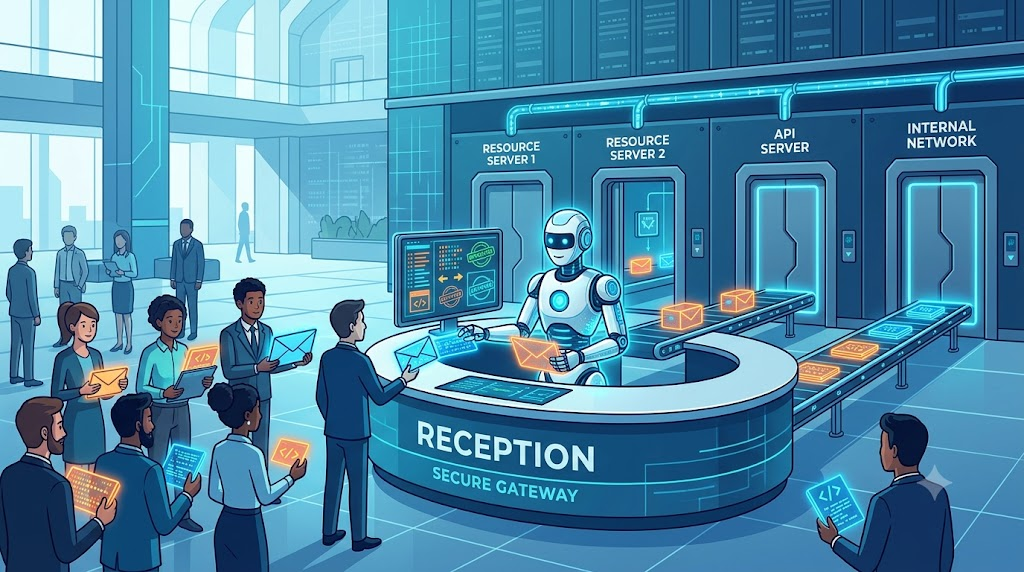
So, what is a reverse proxy? Essentially, it acts as a highly intelligent traffic cop. It protects the identity and physical IP address of your origin servers from the public internet.
The Request-Response Cycle
To truly grasp what is a reverse proxy, you need to carefully trace the data flow. A user sends an HTTP request from their laptop or smartphone. That request hits this intermediary gateway first. The proxy system evaluates the payload, securely fetches the requested data from a backend application, and finally returns it to the user. From the user’s perspective, they communicated with the origin server directly. Understanding what is a reverse proxy completely changes how you view safe network architecture.
Anatomy of a Reverse Proxy Server
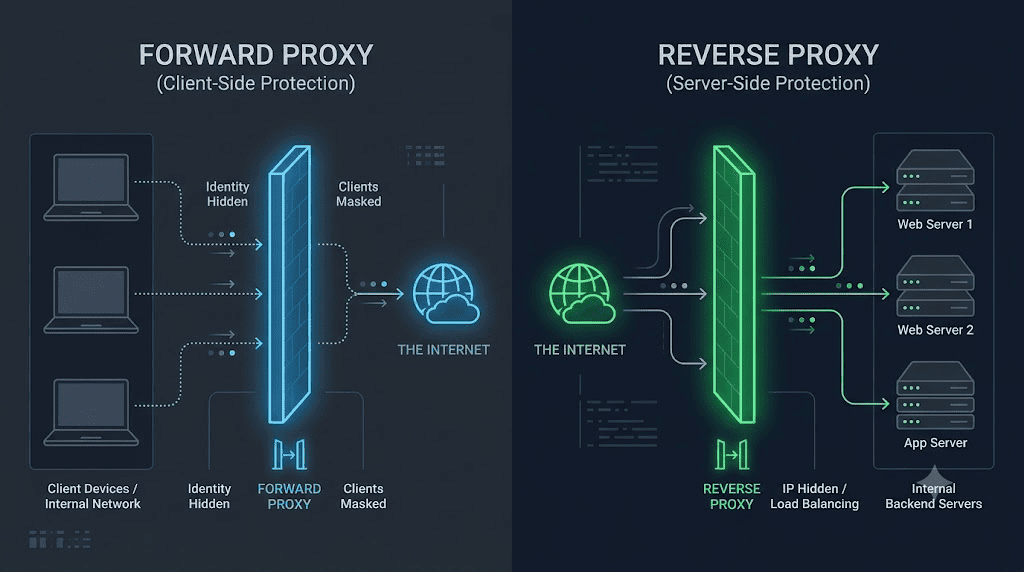
To deeply understand how what is a reverse proxy server architecture works in practice, we must contrast it with older, more familiar technologies. Popular software solutions like NGINX, HAProxy, and Apache often serve as these protective gateways, optimized specifically for high-volume connections.
When someone asks what is a reverse proxy vs proxy, they are usually comparing inbound and outbound gateways. A traditional forward proxy hides the client. For example, you might use a corporate VPN or an anonymizing proxy to hide your personal IP address from the websites you visit.
Conversely, setting up a what is a reverse proxy server environment does the exact opposite. It strictly hides the server. The public internet never interacts with the actual backend infrastructure. It only sees this shielded, hardened gateway. Every major enterprise application utilizes a what is a reverse proxy server today. If malicious actors try to scan or map your internal network, they simply hit a brick wall. A well-configured what is a reverse proxy server prevents major security breaches before they even start.
Core Use Cases: What is a Reverse Proxy Used For?
Why do systems architects go through all this trouble? If a client asks, “what is a reverse proxy?” you can confidently explain the incredible operational benefits that keep their businesses running smoothly online.

Flawless Load Balancing
Imagine thousands of frantic shoppers logging into an e-commerce store simultaneously during a holiday flash sale. This gateway acts as an extremely efficient load balancer. It distributes incoming traffic evenly across five, ten, or a hundred different backend servers. If one machine overheats or fails, the proxy seamlessly redirects traffic to the surviving healthy nodes.
SSL Encryption Termination
Encrypting and decrypting SSL certificates takes massive computational power. We call this process SSL termination. The proxy decrypts incoming secure requests so your backend servers can focus purely on processing business logic and rendering user interfaces.
Defending Against DDoS Attacks
Malicious bots regularly flood networks with junk traffic to knock websites offline. A proxy absorbs these massive Distributed Denial of Service (DDoS) spikes. By applying aggressive rate limiting and IP blacklisting at the network edge, it blocks bad actors before they ever touch your fragile database.
Content Delivery and Caching
Speed is everything on the modern internet. Slow load times destroy conversion rates. This is exactly where global edge networks step in. When searching online for cloudflare what is a reverse proxy, you quickly learn about modern content delivery networks (CDNs). The popular query “cloudflare what is a reverse proxy” highlights how these massive companies operate on an international scale to speed up the web.

Reading a cloudflare what is a reverse proxy guide reveals the sheer power of edge caching. So, knowing what is a reverse proxy cache is crucial for optimizing page speeds. It is essentially localized temporary storage. A proper what is a reverse proxy cache stores heavy static assets—like high-resolution images, CSS stylesheets, and HTML pages—closer to the end users.
If a user in Tokyo requests your website, a proxy server stationed in Tokyo serves the stored data instantly. Developers leverage a what is a reverse proxy cache to vastly reduce backend server load and database queries. Without a what is a reverse proxy cache, your origin servers would constantly regenerate the exact same files for every single visitor, wasting CPU cycles. If you analyze a cloudflare what is a reverse proxy setup, you clearly see how caching achieves sub-second load times while saving enormous bandwidth costs.
Summary – The Backbone of Modern Web Infrastructure
These intermediary gateways keep the modern internet fast, secure, and infinitely scalable. Without them, our favorite applications would instantly collapse under their own heavy traffic. Knowing what is a reverse proxy is essential for any modern software engineer or IT administrator. Ultimately, the next time a colleague asks you what is a reverse proxy?, you know exactly what to say. It is the invisible, ultimate guardian of web servers everywhere.
FAQs
Q 1: What is the difference between a forward proxy and a reverse proxy?
A forward proxy sits in front of clients to hide their identity from websites, while a what is a forward proxy vs reverse proxy comparison shows that a reverse proxy sits in front of web servers to protect and manage incoming traffic. A forward proxy protects individual users navigating outward to the vast internet. Conversely, the reverse proxy protects a company’s internal servers from the unpredictability and hostility of the outside world.
Q 2: Can you give a simple explanation of a reverse proxy?
Think of a reverse proxy as the front desk receptionist of a massive corporate office building. Visitors never talk directly to the executives; instead, the receptionist screens, routes, and handles requests for them, providing a clear what is a reverse proxy simple explanation. The receptionist filters out bad actors, directs packages to the right departments, and occasionally hands out standard informational brochures without ever bothering the busy bosses working in the back.




Leave a Reply